
Balance is a reflex, not a thought
When you start to wobble, you do not consciously decide which muscles to fire. A reflex network of tiny stabilizing muscles, joint sensors, and brainstem pathways catches you before you ever notice. That network weakens with age and disuse — and conventional exercise barely touches it. Vibration forces it to engage hundreds of times per minute, retraining the reflex itself.
The proprioception piece
Proprioception is your body's awareness of where it is in space. It declines quietly with age and dramatically after any joint replacement. Standing on a moving surface — even a small, controlled one — retrains proprioceptive sensors in the feet, ankles, knees, and hips. Within weeks, most clients notice they feel steadier walking on uneven ground, getting in and out of cars, and turning quickly.
Posture follows balance
The deep core stabilizers and the long postural muscles of the back are the same muscles that hold you upright when you are standing still. When they get stronger and more responsive, you stand taller without thinking about it. Many clients are surprised to discover that the chronic neck and upper-back tension they assumed was permanent eases simply because their posture has changed.
A practical fall-prevention protocol
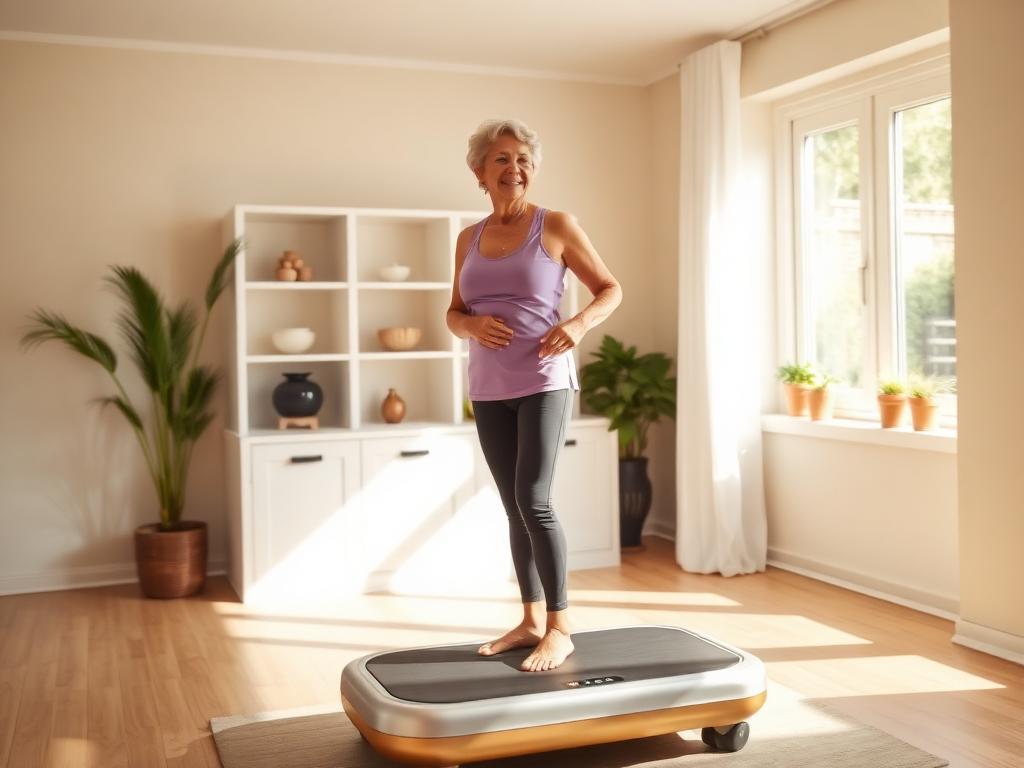
Five to ten minutes a day, always with a handrail at the start. Once balance has clearly improved, practice letting go of the rail for short intervals, then practice standing on one leg, then practice slow head turns while standing. Each step compounds. Becky has worked with clients in their nineties who measurably improved their balance within a single season of consistent daily use.