
Sarcopenia is the real enemy
Sarcopenia — age-related muscle loss — begins as early as forty and accelerates after sixty. Once muscle is gone it is hard to replace, and its absence is what drives most of the falls, fractures, and lost independence we associate with old age. The good news is that muscle is enormously responsive to the right stimulus, at any age. WBV is one of the most efficient stimuli we have.
How involuntary contractions work
When the platform vibrates, the stretch reflex in your muscles fires automatically — and it fires fast, between 20 and 50 times per second. Each contraction recruits motor units, including the fast-twitch fibers that voluntary slow exercise rarely reaches. Over a ten-minute session, your muscles do the equivalent of thousands of repetitions, without you having to count, push, or strain.
Flexibility as the quiet bonus
The same vibrations that build strength also lengthen the connective tissue around your muscles. Clients consistently report that they can reach further, twist more freely, and bend without the catches and pulls that had become normal. Tight hamstrings, frozen shoulders, and stiff hips all soften with regular use — not because you're stretching harder, but because the tissue itself is finally relaxing.
A simple starting protocol
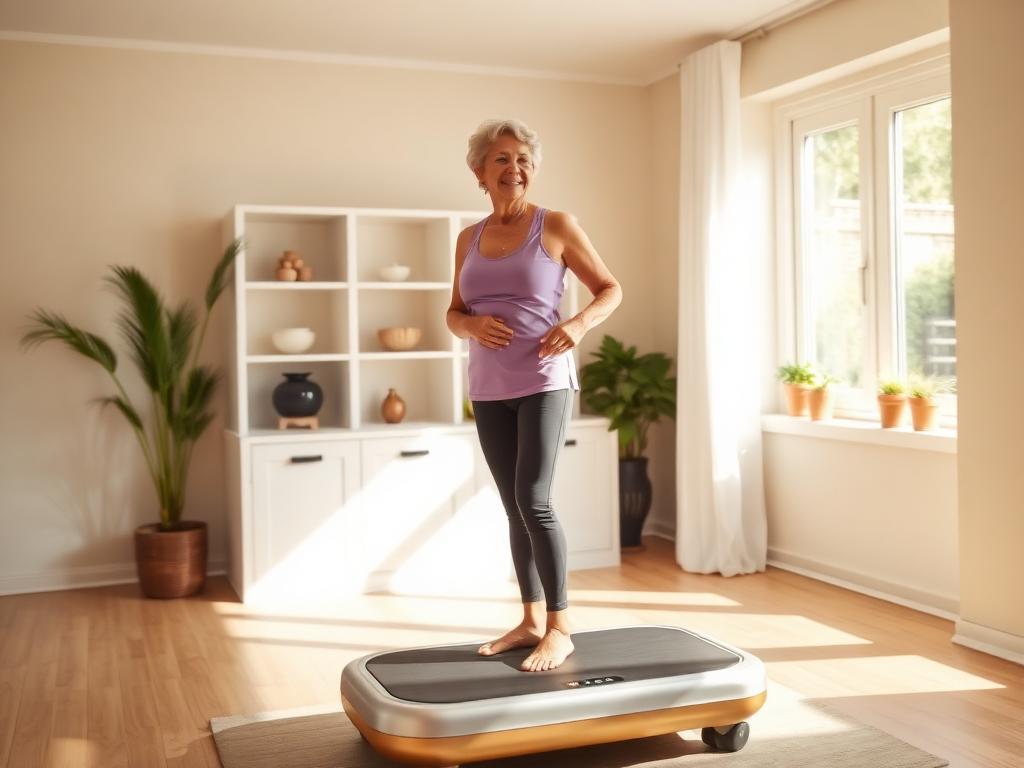
Stand on the plate with knees soft and core engaged. Start with five minutes a day at a moderate frequency. As you gain confidence, add slow squats, lunges, push-ups against a wall, or weighted holds. Sometimes in one session or over the course of two to three weeks, most clients can feel a difference in how easily they get up from a chair. Within two to three months, the difference is visible.