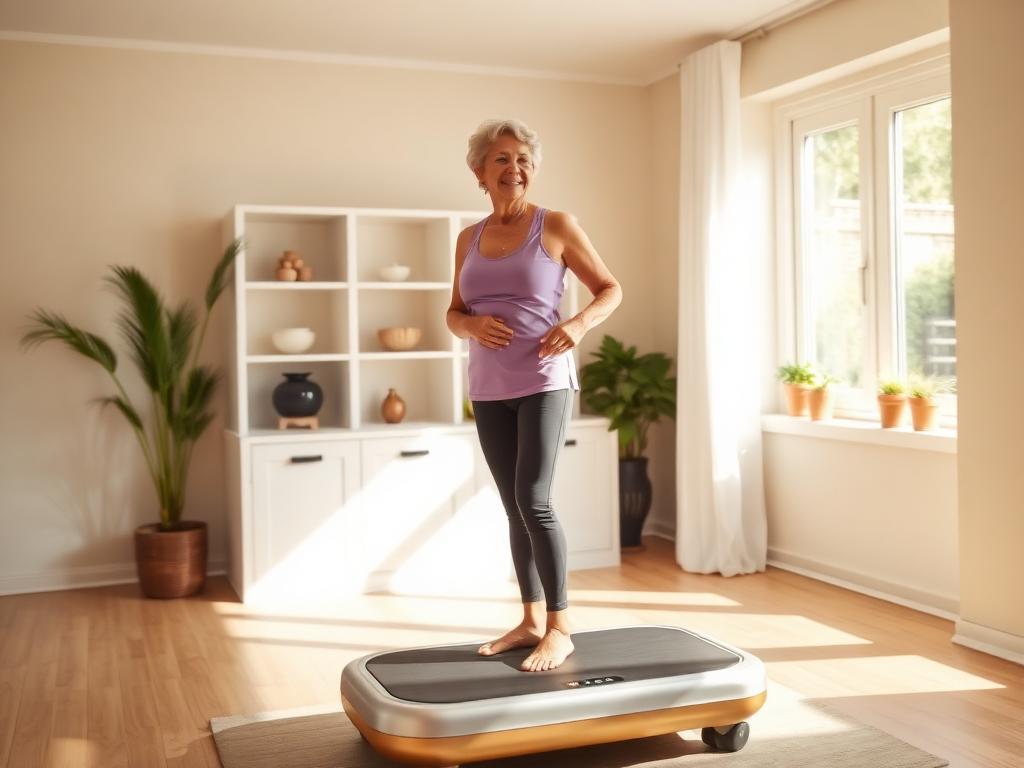
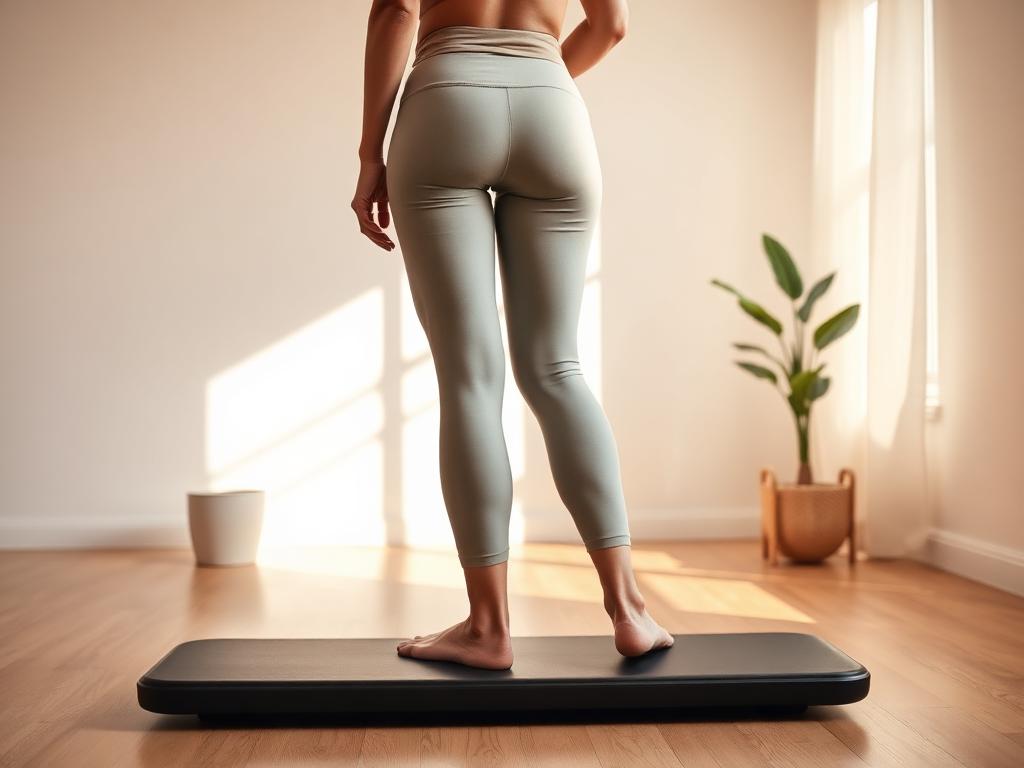
Why traditional exercise stops working
After fifty, and especially after sixty, the body's response to conventional exercise changes. Joints complain. Recovery takes longer. The hormonal landscape that used to make a calorie deficit easy no longer cooperates. Walking still matters, but walking alone often is not enough to shift the scale. This is where WBV earns its place — it provides metabolic stimulus without the wear-and-tear that pushes older bodies to quit.
What vibration actually does
A vibration plate produces 20 to 50 hz (vibrations per second). Your muscles respond to each one with an involuntary contraction. In a ten-minute session, that adds up to thousands of micro-contractions — work your conscious mind never had to do, but that your metabolism absolutely registers. Heart rate climbs, circulation increases, and the lymphatic system, which has no pump of its own, finally gets the mechanical push it needs to clear stagnant fluid and metabolic waste.
Hormones, stress, and stubborn fat
Chronic stress and elevated cortisol are the quiet drivers behind most stubborn middle-body weight gain. WBV down-regulates the sympathetic nervous system — the fight-or-flight side — and shifts the body toward the parasympathetic state where it can actually let go of stored fat. Clients often report that the first thing they notice isn't the number on the scale, it's that their waistband fits differently, their mood is increased, their energy is higher, and their sleep has improved.
A realistic protocol
For weight loss, ten to fifteen minutes a day, ideally in the morning, is the protocol Becky recommends most. Add gentle squats, calf raises, or stretches on the plate to multiply the effect. Pair with the basics — protein at every meal, water, sleep, daily walking — and the body responds. The plate is not a substitute for the rest of your life. It is what makes the rest of your life work again.